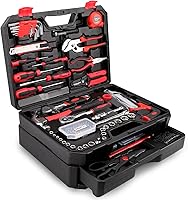
Mechanics Tool Sets: The Complete Buying Guide
The right mechanic tool set covers the fasteners and jobs you handle most. Start with drive size, SAE and metric coverage, socket types and storage, then add pieces only when they solve a real gap.
On this page (11 sections)
- What should a mechanic tool set include?
- How do you choose a mechanic tool set size?
- Which drive size is right for your work?
- Should you buy SAE, metric or both?
- What socket types and points should you look for?
- Which ratchet features matter?
- How should you compare storage and organization?
- Four mechanic tool sets to compare
- How do you compare sets before buying?
- What are the common mistakes when choosing a set?
- Which mechanic tool set should you choose?
The right mechanic tool set covers the fasteners and jobs you handle most. Start with drive size, SAE and metric coverage, socket types and storage, then add pieces only when they solve a real gap.
A compact kit can be easier to store and carry. A broader set may cover more drive sizes, wrenches and specialty bits, but its piece count alone does not tell you whether it fits your work.
This guide explains what to compare, how to choose a set size and which features matter. For a first look at a particular size range, see what size socket set you need.
What should a mechanic tool set include?
A mechanic tool set should include sockets and ratchets that fit your common fasteners, plus extensions or adapters if your work calls for them. Broader sets may add wrenches, hex keys and specialty bits.
Start with a short list of the tasks you expect to do. Routine vehicle maintenance, small repairs around the garage and occasional equipment work can call for different coverage.
| Tool or feature | Why it matters | Check before buying |
|---|---|---|
| Sockets | Fit nuts and bolts in the set's size range | Which sizes and measurement systems are included? |
| Ratchets | Turn sockets without removing them after every stroke | How many drive sizes are covered? |
| Extensions | Reach fasteners set back from an opening | Are the lengths suited to your work? |
| Adapters | Connect compatible tools with different drive sizes | Which drive combinations are included? |
| Wrenches | Work where a socket cannot fit | Are the needed SAE or metric sizes included? |
| Hex keys or bits | Turn matching internal-drive fasteners | Do the shapes and sizes match your tasks? |
| Case or storage box | Keep pieces together and easier to sort | Can you carry it and return tools to place? |
A high piece count can include many small bits or repeated size types. Read the included tools and sizes, then compare them with your list.
For a related overview of household tools, see what belongs in a basic home tool kit. A mechanic set can support some home repairs, but it may not include general-purpose tools such as a hammer or tape measure.
How do you choose a mechanic tool set size?
Choose a set by coverage, not piece count alone. The best fit has the sizes, drive types and supporting tools you need without making storage harder.
A compact set can work for occasional repairs when its range covers the fasteners you encounter. A larger set can make sense if you handle varied jobs or want wrenches, deep sockets and multiple ratchet drives in one case.
| Your work pattern | A reasonable starting point | What to verify |
|---|---|---|
| Occasional small repairs | Compact set | Common socket sizes and a useful ratchet |
| Regular basic maintenance | Mid-size set | SAE and metric coverage, extensions and drive range |
| Varied garage or vehicle work | Broad set | Wrenches, deep sockets, bits and storage |
| A growing tool collection | Set that fills known gaps | Compatibility with tools you already own |
These are starting points, not fixed rules. Your existing tools and the fasteners you work with should guide the final choice.
Count the pieces you will actually use. A 230-piece set may suit varied jobs, while a compact kit may be easier to organize if your needs are limited.
See how to use a socket set for the basic process of matching a socket to a fastener and working with a ratchet.
How many pieces do you need in a mechanic tool set?
You need enough pieces to cover your common fasteners and tasks, not a target number. Compare the actual socket sizes, drive sizes and added tools in each set.
The piece count can include sockets, wrenches, hex keys, bits and accessories. Ask what each added group lets you do, and whether you already own those tools.
Which drive size is right for your work?
The right drive size depends on the sockets and fasteners you use most. A set with multiple drives can cover more situations, while a single-drive kit may be lighter and simpler.
Drive size is the square connection between a ratchet and socket. Common sizes include 1/4 in, 3/8 in and 1/2 in, but the tools you need depend on your work and the included socket range.
| Drive size | A useful comparison point |
|---|---|
| 1/4 in | Consider for smaller sockets and more compact work |
| 3/8 in | Compare as a middle option for general socket work |
| 1/2 in | Consider when your work calls for larger sockets |
A larger drive is not automatically right for every fastener. Match the drive and socket to the tool and job, and follow the equipment maker's instructions.
A set that covers three drive sizes can reduce the need to buy another ratchet later. Our socket drive sizes guide explains how to compare 1/4 in, 3/8 in and 1/2 in drives.
Should you buy SAE, metric or both?
Choose SAE, metric or a combination based on the fasteners you expect to handle. If your work spans different equipment, a set with both systems can offer more flexibility.
SAE socket sizes are measured in fractions of an inch, while metric sizes use millimeters. Similar-looking sizes are not always interchangeable, so use the system that matches the fastener.
If you are uncertain, check the manuals and fasteners for the vehicles or equipment you work on. Keep the two systems separated in the case so it is easier to find the correct size.
Read SAE vs. metric socket sets for more on choosing between the two systems. You can also use our socket set sizes chart to compare sizes in order.
What socket types and points should you look for?
Choose socket types for the fasteners and access you encounter. Standard and deep sockets cover different reach needs, while a 6-point or 12-point profile changes how the socket engages the fastener.
A deep socket can accommodate a longer threaded section that would bottom out in a standard socket. A standard socket is shorter, which can help when clearance is limited.
Sets may include 6-point sockets, 12-point sockets or both. Match the socket profile to the fastener head as well as its size.
A 6-point socket fits a matching hex fastener. Our [6-point vs.
12-point socket guide](/6-point-vs-12-point-sockets/) explains the difference.
Use only impact-rated sockets with impact tools, along with accessories rated for that use. Read impact sockets vs. regular sockets before you pair tools.
Are deep sockets useful?
Deep sockets are useful when a long threaded stud prevents a standard socket from seating fully on a nut. Check which deep sizes a set includes and whether they match your tasks.
Which ratchet features matter?
Ratchet features matter most when they suit your space and the way you work. Compare head size, tooth count, quick release and handle access against the jobs you expect to do.
A slim head can help in confined areas, while a quick-release mechanism can make it faster to remove a socket. Tooth count affects how far the handle needs to move before the ratchet engages again.
A smaller swing arc can help when nearby parts restrict handle movement. Head shape and handle length also affect whether you can reach and turn the fastener.
Read 72-tooth vs. 90-tooth ratchets if small movements are a key concern.
Do not choose by tooth count alone. Consider whether the head and handle can reach the fastener, and use the right tool for the space.
How should you compare storage and organization?
Choose storage that keeps the set easy to carry, sort and put away. A case or box that suits your available space can make a broad set more practical.
A molded case can give tools individual positions, while drawers can group tools by type or drive. Check the overall storage footprint, how the pieces are held and whether you can return them to their places after a job.
If you already own other cases or a stackable storage system, check compatibility before choosing a set based on that feature. For tips on keeping sizes easy to find, see how to organize a socket set.
Storage matters more as a set grows. A larger kit that stays organized can be more useful than a broader collection where pieces are hard to locate.
Four mechanic tool sets to compare
Choose the Craftsman for a broad mix of tools and drawer storage, or the DeWalt 192-piece set for socket coverage in a hard-shell case. The smaller DeWalt suits SAE work, while the GEARWRENCH offers quick-release ratchets and stamped socket markings.
Craftsman 230-piece mechanics tool set
The Craftsman 230-piece mechanics tool set combines SAE and metric tools with 1/4 in, 3/8 in and 1/2 in drives. It includes 91 sockets, 3 ratchets, 21 wrenches, 44 hex keys, 66 specialty bits and 5 accessories.
Best for a broad tool mix with drawer storage
Its 72-tooth ratchets have a 5-degree swing arc. Craftsman says the 1/4 in and 3/8 in ratchet heads are up to 25% thinner than its CMMT81747, CMMT81748 and CMMT81749 comparison models.
The toolbox has a one-handed drawer locking dial and works with VERSASTACK storage. Choose it if you want sockets, wrenches and bits together, and have room for a 24.7 lb set.
DeWalt 192-piece mechanics tool set
The DeWalt 192-piece mechanics tool set combines SAE and metric sockets with 1/4 in, 3/8 in and 1/2 in drive ratchets. It also includes extensions, adapters, universal joints, hex bit sockets and spark plug sockets.
Best for socket coverage in a carrying case
DeWalt says its DirectTorque socket design helps reduce fastener rounding and improve grip. The set includes 6-point sockets and a hard-shell case for storage and transport.
Choose it if you want standard and deep sockets across several drive sizes. Compare the exact sizes with your usual work, especially if you need a particular socket or bit.
DeWalt 108-piece mechanics tool kit
The DeWalt 108-piece mechanics tool kit offers two pear-head ratchets, sockets, extensions and adapters. It has 1/4 in and 3/8 in drives and SAE sizing.
Best for a smaller SAE starting kit
DeWalt says the sockets use DirectTorque technology to help prevent rounding of fasteners and improve grip. Its two drive sizes give it a narrower drive range than the DeWalt 192-piece mechanics tool set.
Choose it if you want a smaller SAE kit and its drive range covers your needs. Check whether you also need metric sockets or tools beyond these contents.
GEARWRENCH 232-piece 72-tooth mechanics tool set
The GEARWRENCH 232-piece 72-tooth mechanics tool set combines SAE and metric tools with a 3-drawer storage box. It has quick-release ratchets, a polished chrome finish and large stamped socket size markings.
Best for quick socket changes
The ratchet head is teardrop shaped and has an on/off switch. Its 6-point sockets use an off-corner loading design that GEARWRENCH says helps reduce fastener rounding.
Choose it if quick socket removal and readable size markings suit your work. Confirm the ratchet tooth count before ordering, since GEARWRENCH's supplied descriptions conflict between 72 and 45 teeth.
How do you compare sets before buying?
Compare each set against the same checklist so piece count and brand names do not distract from fit. The included sizes, drives and tools should match your jobs.
- Write down the fasteners and tasks you handle most.
- Decide whether you need SAE, metric or both.
- Compare the included sizes and socket types.
- Check the drive sizes and ratchet features.
- Note useful extras, such as wrenches, bits, extensions or adapters.
- Check the case or box dimensions and how you will store it.
- Compare the warranty terms from the manufacturer where available.
Avoid paying for tools that duplicate your current set unless you want a second kit for another location. Also check whether any missing sizes can be added later in the same drive and measurement system.
What are the common mistakes when choosing a set?
The most common mistake is buying by total piece count without checking what those pieces are. A set only helps when its tools fit your fasteners, tasks and storage space.
Other mistakes include assuming SAE and metric sockets interchange, overlooking the drive size, or buying a large case without a place to keep it. Using a socket that is not impact-rated with an impact tool is another mismatch to avoid.
When a socket does not fit well, stop and check the size, profile and measurement system. Forcing a poor fit can damage a fastener or tool.
Which mechanic tool set should you choose?
Choose the Craftsman mechanic tool set if you need wrenches, bits and drawer storage, or the DeWalt 192-piece set if socket coverage is your priority. Pick the DeWalt 108-piece kit for smaller SAE needs, or compare the GEARWRENCH if quick-release ratchets matter most.
If storage is your main concern, compare the case style and footprint before counting extra pieces. For more options, see our best mechanics tool sets and compare each set's contents with your checklist.
Frequently asked questions
What should a mechanic tool set include?
A mechanic tool set should include sockets, ratchets and useful extensions or adapters that match your common jobs. For broader work, choose the SAE and metric sizes, drive sizes, wrenches and bits you need, checking the included pieces instead of judging only by the total count.
Is a 108-piece mechanic tool set enough?
A 108-piece set can be enough for basic repairs and maintenance if its socket sizes and drive range match your work. Check for the extensions and adapters you need before choosing a larger set, since extra pieces help only when they fill gaps in your tools.
Do I need SAE and metric sockets?
You need both SAE and metric sockets if your vehicles or equipment use fasteners from both systems. Check your manuals and common fasteners before buying, and keep the systems separate in storage so you can find the correct fit without forcing a socket that is too loose.
Which socket drive size should I choose?
Choose a drive size based on the socket sizes and work you do most. A 1/4 in drive can suit smaller fasteners, while larger drives pair with larger sockets, so check the included size ranges and use our drive-size guide to compare the options.
Are more pieces always better in a mechanics set?
More pieces help when they add sizes, drive options or tools you will use. Compare the included tools with your common jobs and existing collection, since a higher count can also mean duplicate sizes, specialty bits you do not need, or a larger case to store.