72-Tooth vs 90-Tooth Ratchets: Does It Matter?
A 90-tooth ratchet can need less swing space than a 72-tooth ratchet, but tooth count alone doesn't settle it. Compare the stated swing arc and head shape, then choose based on how tight the work area is.
On this page (6 sections)
A 90-tooth ratchet can need less swing space than a 72-tooth one, but compare the stated arc rather than tooth count alone. The DURATECH here has a 4-degree arc, while both the 72-tooth GEARWRENCH and 90-tooth Craftsman specify 5 degrees.
Tooth count describes the number of teeth in the ratchet mechanism. More teeth can allow a smaller movement before the next engagement, but they don't tell you whether the ratchet will fit between nearby parts.
What does 72-tooth vs 90-tooth mean?
A 72-tooth ratchet has 72 teeth in its mechanism, while a 90-tooth ratchet has 90. More teeth can reduce the movement needed for the next engagement, though the stated swing arc is the more useful comparison for a buyer.
A full circle is 360 degrees, so dividing by the tooth count gives a theoretical tooth spacing of 5 degrees for 72 teeth and 4 degrees for 90 teeth. Actual tool designs can vary, so use the manufacturer's swing-arc figure when available.
The GEARWRENCH 3/8 inch 72-tooth gimbal ratchet has a 5-degree swing arc. The DURATECH 3/8 inch 90-tooth ratchet has a 4-degree arc, while the Craftsman 3/8 inch 90-tooth low profile ratchet specifies 5 degrees.
Does a 90-tooth ratchet make a big difference?
A 90-tooth ratchet can help when the handle has only a little room to move. The 1-degree difference between a 5-degree and 4-degree swing arc may help in tight spots, but it won't solve a clearance problem caused by the head or an obstructed handle.
In an open area, you can usually move the handle through a wider arc, so the extra teeth may not change much. In close quarters, a smaller arc may let the mechanism engage where a larger arc cannot.
Choose based on the full setup: the fastener, socket, ratchet head, and available handle path. Our guide to socket drive sizes explains how 1/4, 3/8, and 1/2 inch drives differ, which can help you match the ratchet to the job.
Is tooth count the only thing that matters in a tight space?
Head shape and clearance can matter as much as tooth count. A low-profile head may fit beneath an obstruction, while a head that pivots may help you line up with the fastener.
Craftsman says its 90-tooth ratchet has a head up to 25% thinner than the CMMT81748, with a stated 5-degree arc. That thinner head may help if the obstruction is above the ratchet, though it doesn't reduce the movement needed for each engagement.
The GEARWRENCH 72-tooth gimbal ratchet has a head that rotates on 2 planes. Its 5-degree arc matches the Craftsman model's, but the rotating design offers another way to approach an awkward fastener.
If the head fits but you can't move the handle far enough, a smaller arc may help. If the ratchet head itself can't reach or line up with the fastener, consider head profile and movement first.
Which 72-tooth or 90-tooth ratchet should you consider?
Choose by the feature that solves your space problem. These 4 options include single ratchets and a socket set, so match the format to whether you need one tool or sockets too.
Who should choose the GEARWRENCH 72-tooth gimbal ratchet?
Choose the GEARWRENCH 3/8 inch 72-tooth gimbal ratchet if a rotating head may help you reach a fastener from an awkward angle. It has a 72-tooth mechanism, a 5-degree swing arc, and a head that rotates on 2 planes.
Who should choose the DURATECH 90-tooth ratchet?
Choose the DURATECH 3/8 inch 90-tooth ratchet if you want a stated 4-degree arc. It has a quick-release button for socket changes and a forward/reverse switch for changing direction.
Who should choose the Craftsman 90-tooth low-profile ratchet?
Choose the Craftsman 3/8 inch 90-tooth low profile ratchet if head clearance is the main concern. It has a 90-tooth mechanism and a 5-degree arc, and Craftsman says its head is up to 25% thinner than the CMMT81748.
Who should choose the EPAuto 40-piece socket set?
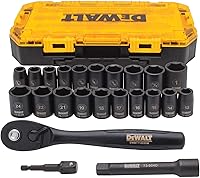
Choose the EPAuto 40-piece socket set with 72-tooth ratchet if you need sockets and a ratchet together. The set includes 1/4 and 3/8 inch drive sockets, metric and English sizes, and a plastic organizing case.
For help selecting a full set, see how to choose a ratchet and socket set. If you already have a set and need a refresher on fitting sockets and turning fasteners, read how to use a socket set.
How do you choose between 72 and 90 teeth?
Pick the ratchet with the right fit and swing arc for your work area. A 90-tooth design can offer a smaller movement between engagements, while a 72-tooth model may still suit the task or provide another useful feature, such as a rotating head.
Before choosing, check these points:
- Swing arc: Compare the stated degree figure. A smaller arc needs less movement for the next engagement.
- Head clearance: Look at the head profile if a nearby surface sits above the ratchet.
- Handle path: Check whether the handle has room to move through the required arc around the fastener.
- Head movement: A swiveling or flexible head may help when the approach angle is awkward.
- Set or single tool: A socket set may be useful when you also need sockets in the sizes your work requires.
For more on matching sockets and drive sizes, see the socket set sizes chart. If you are deciding between socket designs for a fastener, our guide to 6-point vs 12-point sockets covers how the contact shape differs.
Is a 72-tooth vs 90-tooth ratchet worth comparing?
Compare 72-tooth and 90-tooth ratchets when movement around the fastener is limited. Choose the DURATECH for its 4-degree arc, or the Craftsman if its low-profile head addresses the obstruction.
Choose the GEARWRENCH if its head rotation suits an awkward approach. If you also need sockets, the EPAuto combines metric and English sizes with a 72-tooth ratchet.
Before choosing a set, use the socket set sizes chart to work out which sizes and drives you need.
Frequently asked questions
Is a 90-tooth ratchet better than a 72-tooth ratchet?
A 90-tooth ratchet can need less movement between engagements, which helps when space is tight. It isn't automatically better for every job, since head clearance, access, and drive size also matter, so compare the stated swing arc rather than tooth count alone.
How many degrees does a 72-tooth ratchet need?
The GEARWRENCH 72-tooth ratchet here has a 5-degree swing arc, matching the result of dividing 360 degrees by 72. That calculation is a useful starting point, but check the ratchet's stated arc because tooth count alone doesn't describe every part of its mechanism.
Does a 90-tooth ratchet work in tighter spaces?
A 90-tooth ratchet can help when handle movement is limited, but compare the stated arc before choosing. The DURATECH model has a 4-degree arc and the Craftsman model has a 5-degree arc, while head thickness and shape also affect whether either tool fits.
What should I choose for a tight space?
Choose the ratchet whose head and handle fit the space, then compare its swing arc. A lower arc can help when the handle has little room to move, while a low-profile or swiveling head can matter more when clearance around the fastener is the main obstacle.